Developing a great product is only half the battle. To truly build a successful startup, a founder needs to understand their customer base, the best way to reach out to them, what sets the offering apart from the competition, and how to convert that attention into sales.
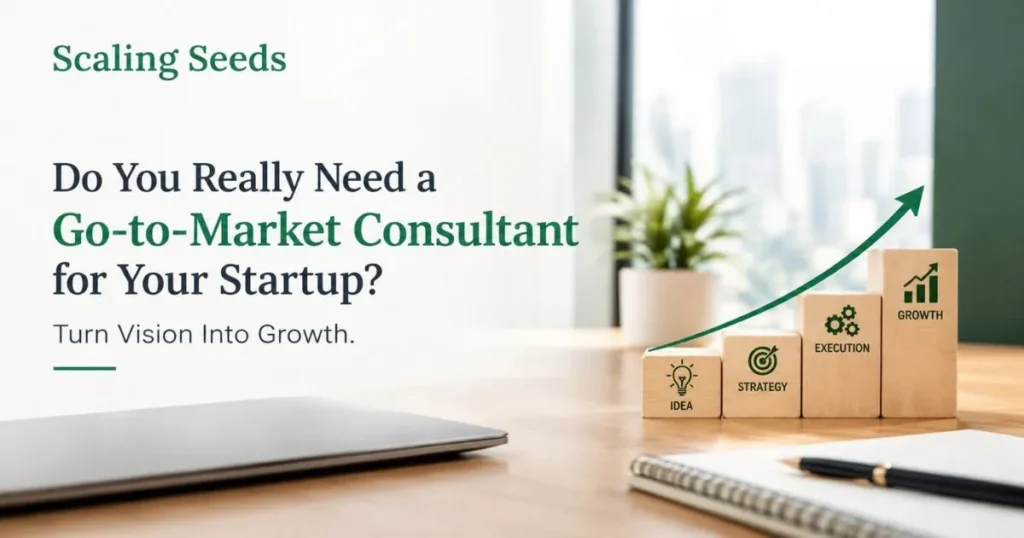
This is where a go-to-market (GTM) strategy comes into play. But do you really need a GTM strategy consultant for your startup?
The answer depends on what you are specifically looking for. For startups looking to enter new markets and sharpen their positioning or scale with greater confidence, the right expertise can provide the clarity and strategic direction needed to move forward.
What Is Go-To-Market Consulting?
Go-to-market consulting is the process of developing an overall strategy for bringing a product or service to market. The developed plan covers the required nuances of approaching certain customer segments, product positioning, defining an acquisition strategy, setting the sales and pricing strategy, and other key areas.
Crucially, a GTM strategy consultant looks at the interplay between the different areas, building a single cohesive strategy, as opposed to a more fragmented approach.
When Does a Startup Need a GTM Consultant?
1. You Haven’t Clearly Defined Your Target Customer
Perhaps the single biggest issue that plagues young startups is the inability to define a clear customer persona. When the customer base is defined as “everyone,” it becomes extremely challenging to build a sustainable marketing strategy, as the available options are either incredibly broad (low targeting) or very specific (high cost).
At the same time, without a specific customer definition, it becomes impossible for a young company to build a sustainable marketing strategy. A GTM consultant can help the startup build a specific, narrow persona based on a set of traits, behaviors, and characteristics relevant to the product or service.
2. Your Product Is Good, but Sales Aren’t Consistent
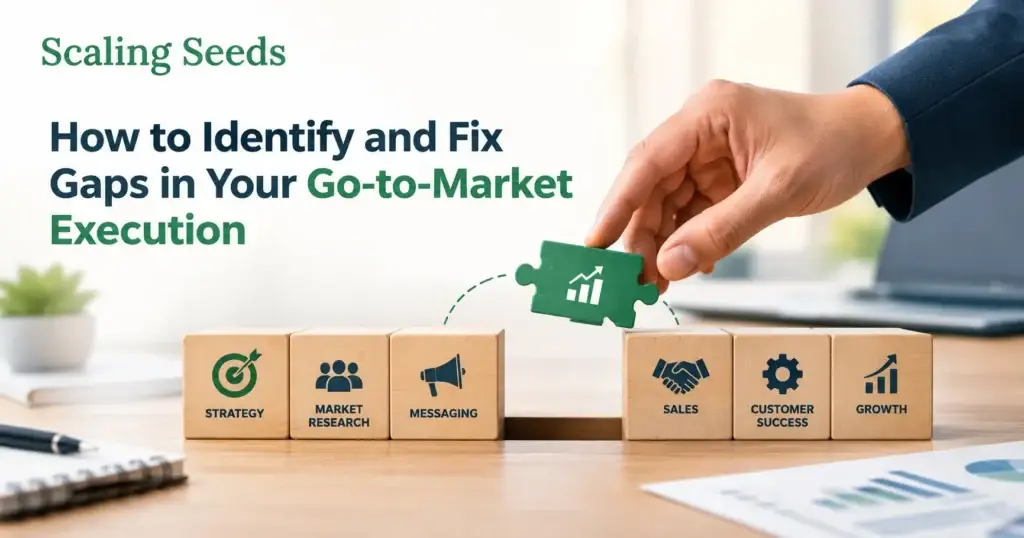
There are many cases where a company has a solid product offering but lacks the ability to build consistent sales. More often than not, this can be explained by an incomplete go-to-market strategy, which leaves important gaps in the understanding of the product’s positioning, channels,, and other key components. A consultant can take a look at the overall GTM approach, identify the gaps, and build a plan based on the input data.
3. You’re Entering a New Market
Whether a new product or a new service, entering a new market always comes with challenges. Depending on the context, the market could be defined as a new industry, a new region, or a new customer segment, but the principles remain the same—an established marketing mix can’t just be repurposed, and the best option at any given moment is to get expert advice and build a strategy from scratch.
4. Your Founders Lack GTM Expertise
There’s no shame in admitting ignorance of a particular subject and starting to research it. More often than not, a young company’s founding team is stretched extremely thin, covering various roles without actually excelling at any. It can be extremely valuable to take a specialist’s opinion both to understand the key problems from an outside perspective and to validate and perhaps correct any preconceived notions.
Moreover, a specialist doesn’t have to work exclusively for the benefit of the company in question. An independent consultant can help build a plan, as well as provide the tools to further implement it, taking into account the nuances of the given context.
When You Might Not Need a Consultant
It is important to note that hiring a consultant isn’t a magic pill for everyone.
If, at the current stage, a company has a working product-market fit understanding and an existing acquisition master, there’s not much value in seeking a GTM consulting service. The same goes for any particularly high-risk proposition, such as when a company is still considering the fundamental viability of the product.
It’s worth mentioning that such considerations don’t only apply at the product development stage. There are several areas where a more experienced consultant’s input can do more harm than good, and building an understanding of what to pay attention to should be a part of any young startup’s growth blueprint.
Regardless of whether a consultant is hired or not, it’s always important to keep the core questions in mind. A go-to-market strategy consulting service exists to answer them, providing solutions based on current knowledge, market research, and other relevant variables.
What Should a Good GTM Consultant Help You With?
Consultants aren’t hired to give vague advice; they are there to build a concrete plan. Ideally, at the end of the consulting engagement, the client would have a good knowledge of who their customers are, what they need, and how they should ideally be approached. Moreover, the company will understand how to approach the customers at an even deeper level, defining the sales plan, engagement channels, the overall sales structure, and other key components. This, however, is not a static document—this planning must evolve and change based on changing conditions.
Customer needs and wants can evolve, and a consultant should always set aside the possibility of necessary revisions based on the information they receive.
Do You Really Need a GTM Consultant?
As we already know, there are no black-and-white answers. Some companies can make it on their own, while others will fail in their attempts to build a sustainable plan without professional assistance.
When in doubt, a startup should think about whether the consultants’ intervention would make a substantial difference in the current situation. Perhaps the company truly knows what it needs but requires external validation. Maybe it doesn’t understand the options available to it in the current market. Finally, the problem could be a lack of direction—while the company knows what to focus on, a consultant can provide the outside view necessary to build a truly profitable strategy.
Conclusion
With the proper help in place, you will not need to lose sight of the woodlands for the trees. No matter how difficult the circumstances, an established strategy built by professionals will be the best option at any given time.
Scaling Seeds is here to help you with the difficult choices that come with growing your business. We strive to guide you through the process of balancing an idea, product, and ongoing sales to help achieve sustainable growth. If you find yourself at a crossroads and aren’t quite sure what to do, we’re here to point you in the right direction.